

Blog
What Are Food Preservatives? Types, Examples, and Safety

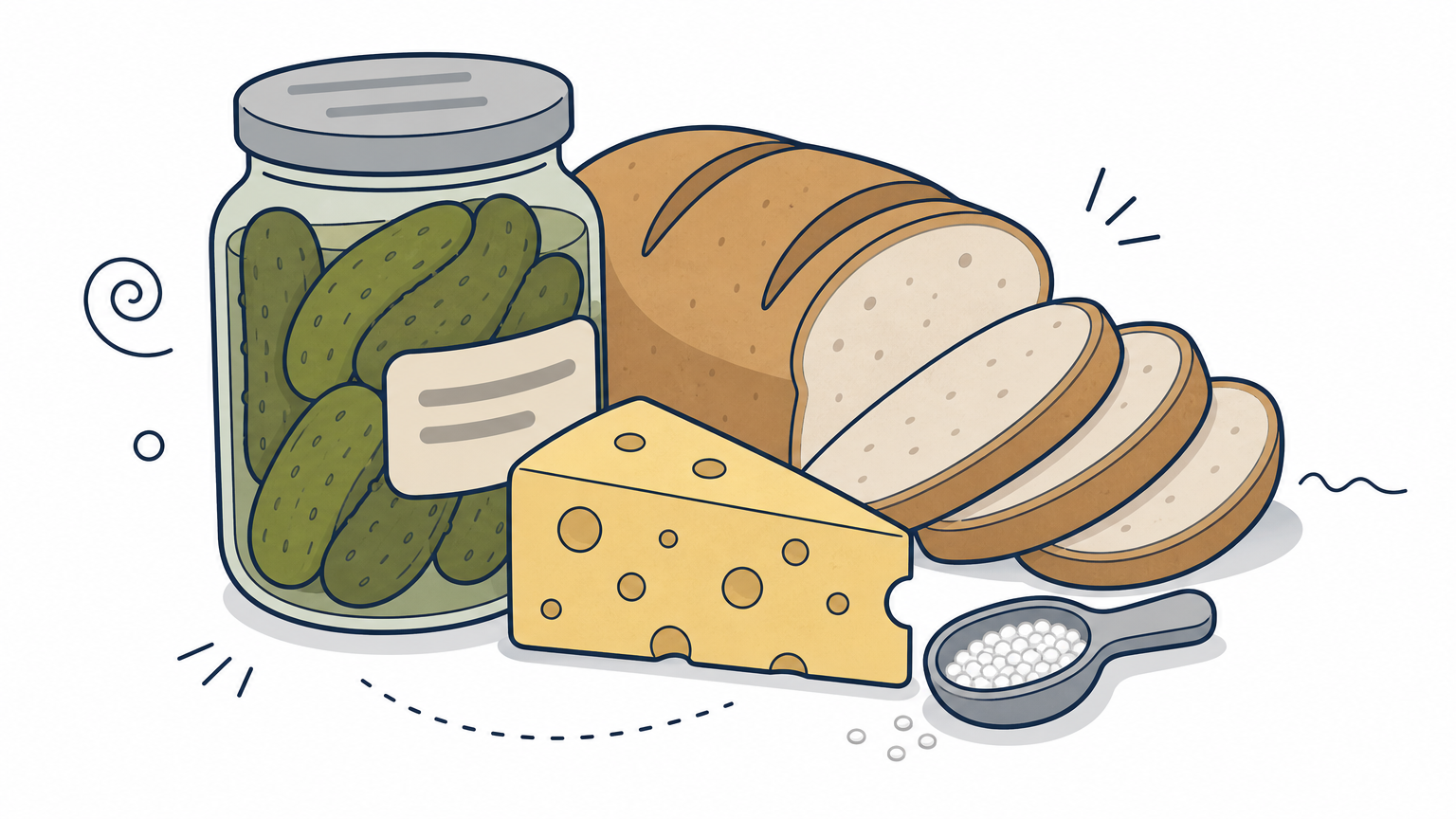
What are food preservatives? They are substances added to food or drink to slow or stop spoilage. They work against three main problems: bacteria, yeasts and molds, oxidation that turns fats rancid, and enzymes that brown cut fruit. Some are natural, such as salt, sugar, vinegar and citric acid. Others are made in a factory, such as sodium benzoate, potassium sorbate and BHT. Used within legal limits, approved preservatives are considered safe for most people.
This guide goes past the one-line definition. You will see why preservatives matter, how to read them on a label and match one to a food, which common examples exist and what each is made of, and what the safety evidence says.
Masiye Labs has supplied laboratory equipment and chemicals in South Africa since July 2013, including food grade chemicals used as preservatives. So the advice below covers the practical side of buying and using them, as well as the science.
Why food preservatives matter
Food preservatives matter because spoilage is fast, common and sometimes dangerous. Without them, much of what reaches a shop shelf would be unsafe or inedible before you could eat it.
What makes food go bad
Four things spoil food, and each needs a different defense:
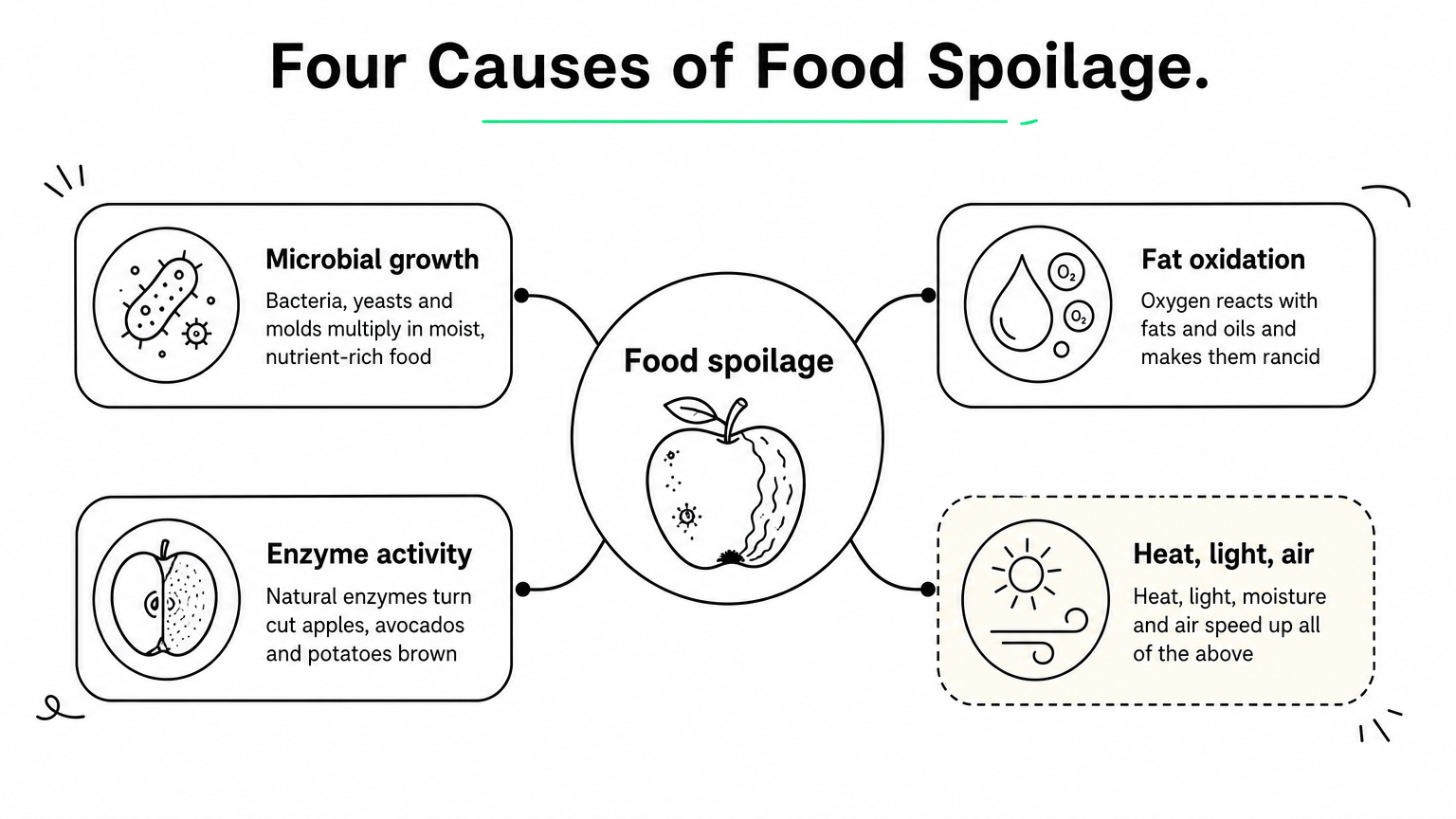
- Microbial growth: bacteria, yeasts and molds multiply in moist, nutrient-rich food.
- Oxidation: oxygen reacts with fats and oils and makes them rancid.
- Enzyme activity: natural enzymes turn cut apples, avocados and potatoes brown.
- Environment: heat, light, moisture and air speed up all of the above.
A preservative targets one or more of these. Antimicrobials stop microbes, antioxidants stop oxidation, and acids such as citric acid also block browning enzymes.
What preservatives change for you
The first gain is food safety. In cured meats, nitrite helps prevent botulism, and mold inhibitors in bread and cheese stop growth that can produce toxins. The second gain is shelf life, which lets food survive transport, warehouses and your pantry. That cuts waste and keeps prices lower.
Preservatives are not the only option. Freezing, drying, canning, salting, smoking, pickling and fermenting also preserve food, and producers often combine physical methods with a preservative to use less of each.
A preservative does not make bad food safe. It keeps good food good for longer.
How to read and choose food preservatives
To read a preservative, check the ingredient list for its class name plus its specific name or E-number. To choose one, match it to the spoilage problem your food actually has.
Reading the label
A label usually shows the class followed by the substance, such as "preservative (potassium sorbate)" or "preservative (E202)". E-numbers from E200 to E299 are mostly preservatives. Antioxidants such as ascorbic acid (E300) sit in the 300s. South African labelling rules also require additives to be declared, so you can always see what a product contains.
Matching a preservative to the food
Start with the threat, then the food’s acidity:
- Acidic drinks, sauces and pickles (pH below about 4.5): benzoates work best here.
- Mold and yeast in cheese, dried fruit and baked goods: sorbates and propionates.
- Rancid fats in oils, cereals and snacks: antioxidants such as tocopherols, rosemary extract or BHT.
- Browning in cut fruit and juice: ascorbic acid or citric acid.
- Cured meat: nitrite, for botulism control.
Working out how much you need
Small producers should first check the legal limit for their specific food, because limits differ by product. Then start low and test. Say a trial uses 0.1% potassium sorbate. A 25kg bag of Masiye Labs’ Potassium Sorbate Granular costs R2,885 including VAT, which is R115.40 per kg. At 0.1%, 1 kg treats 1,000 kg of food, so the preservative costs about R0.12 per kg of food, and one bag treats 25,000 kg.
Always buy food grade material for food, never laboratory grade, and confirm the specification before you order.
Match the preservative to the spoilage threat, then confirm the legal limit before you scale up.
Common food preservatives and what they are made of
The most common preservatives in food are a mix of kitchen staples, plant extracts and synthetic compounds. Origin differs, but each does one of the jobs described above.
A list of common preservatives for food
| Preservative | E-number | Made from | Commonly found in |
|---|---|---|---|
| Salt | none | Mined rock salt or evaporated seawater | Cured meats, pickles, snacks |
| Sugar | none | Sugar cane or beet | Jams, condensed milk |
| Vinegar (acetic acid) | E260 | Fermentation | Pickles, sauces |
| Citric acid | E330 | Usually fermentation | Canned tomatoes, soft drinks, jams |
| Ascorbic acid (vitamin C) | E300 | Plant sources or synthesis | Juices, cut fruit, baked goods |
| Potassium sorbate | E202 | Synthetic, from sorbic acid and potassium hydroxide | Cheese, wine, baked goods |
| Sodium benzoate | E211 | Synthetic, from benzoic acid | Soft drinks, pickles, dressings |
| Calcium propionate | E282 | Synthetic, from propionic acid | Bread, rolls, pastries |
| Sodium nitrite | E250 | Synthetic, also occurs naturally | Bacon, ham, hot dogs |
| Sulfites | E220 to E228 | Sulfur dioxide compounds | Wine, dried fruit |
| BHT | E321 | Synthetic antioxidant derived from phenol | Cereals, chewing gum, snacks |
| Rosemary extract | E392 | Plant extract | Oils, chips, meats |
Natural versus chemical preservatives
"Natural" and "synthetic" describe where a preservative comes from, not how safe it is. Both kinds must meet the same safety standards, and the same compound can be either. Vitamin C comes from citrus or a lab, and citric acid occurs in lemons but is usually made by fermentation for industry.
The term chemical preservatives in food simply means substances produced or purified through chemical processes. They fall into three groups: antimicrobials, antioxidants, and chelating agents such as EDTA that bind metal ions. Many do two jobs, as sulfites and nitrites both protect against microbes and oxidation.
The label "natural" tells you the source of a preservative, not whether it is safer.
Are food preservatives safe to eat?
For most people, yes. Approved preservatives are safe at permitted levels, and a few specific groups of people need to read labels with care.
How regulators decide
Before approval, a preservative is assessed with toxicology studies and estimates of how much people eat. International expert committees set an acceptable daily intake, and the World Health Organization explains how food additives are evaluated. In South Africa, the Department of Health regulates additives under the Foodstuffs, Cosmetics and Disinfectants Act, and each food has permitted limits for each preservative.
Who should be careful
True allergic reactions to preservatives are rare. Sulfites and benzoates can trigger asthma-type symptoms in sensitive people, such as wheezing and shortness of breath. If you react to wine, dried fruit or soft drinks, check labels for those names and speak to your doctor. Nitrite-cured processed meats are best eaten in moderation.
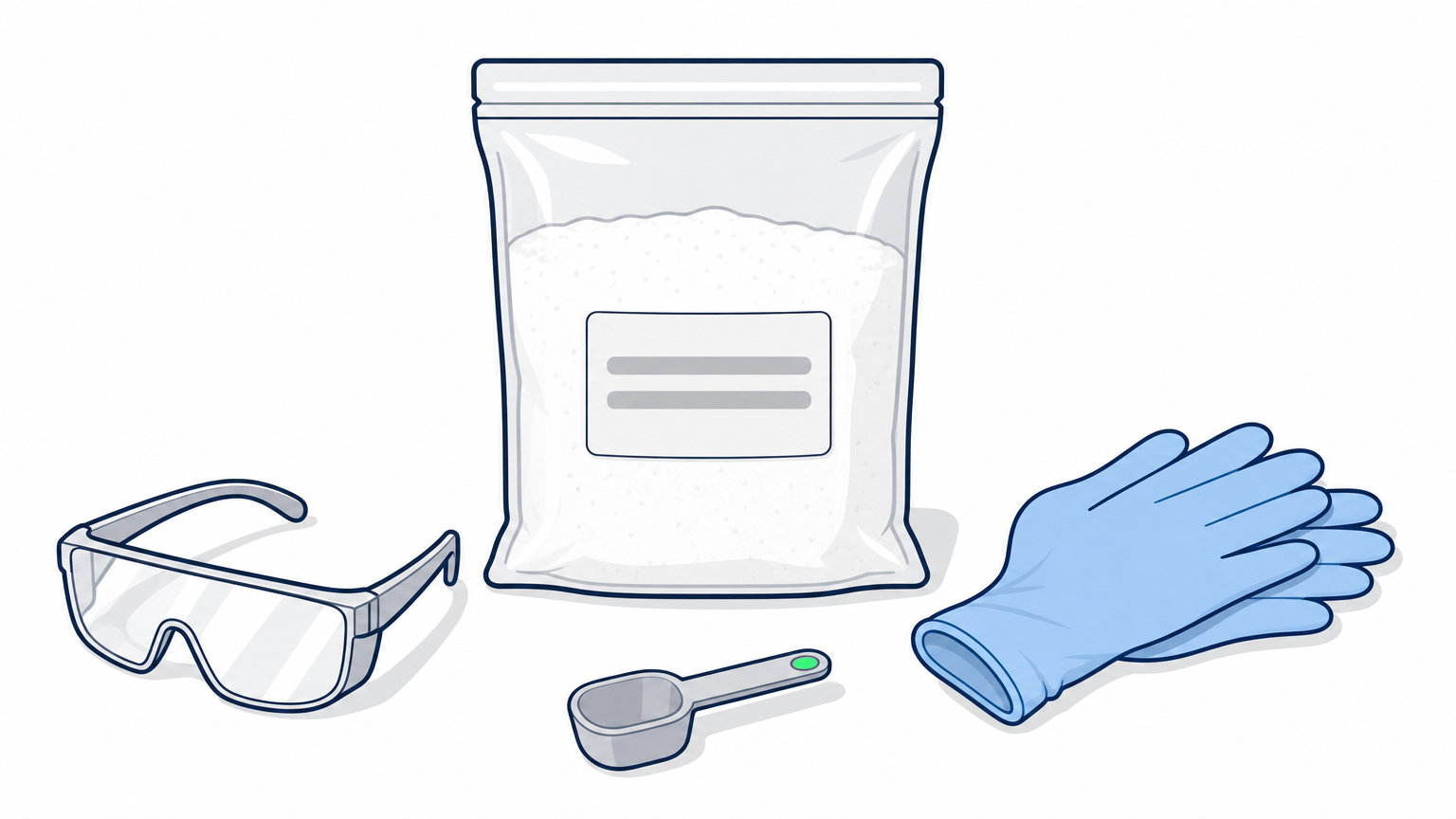
Concentrated raw forms need respect. Sodium diacetate, for example, can irritate eyes, so anyone handling bulk preservatives should wear safety glasses and gloves.
Safe depends on the substance, the amount and the person, not on whether it sounds natural.
Getting preservatives right
Food preservatives are substances that slow spoilage from microbes, oxidation and enzymes, and they keep food safe, stable and affordable. The best choice depends on what threatens your food, and the safest use stays inside the legal limit for that product.
Read labels by class and E-number, treat "natural" and "synthetic" as statements about origin, and take extra care if you are sensitive to sulfites or benzoates. If you make food, test low doses and always use food grade material.
If you need food grade preservatives such as potassium sorbate, sodium benzoate or calcium propionate for your product, you can request a quotation from Masiye Labs and plan your purchase with a written price.