

Blog
Betaine Cocamidopropyl: What It Is, Formula, Uses, Safety

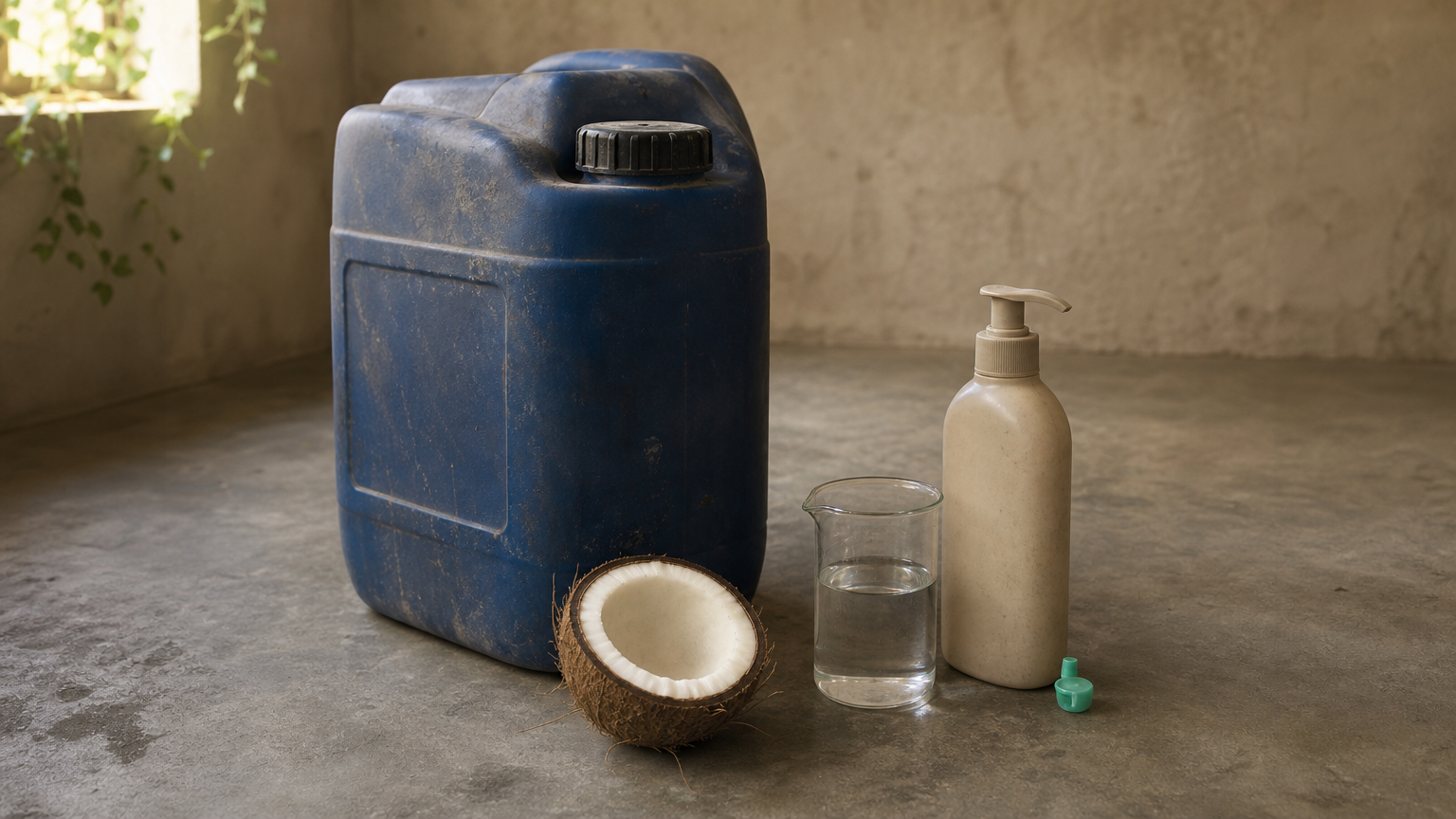
Betaine cocamidopropyl, written on labels as cocamidopropyl betaine or CAPB, is a mild, coconut-derived surfactant. It boosts foam, thickens liquid cleansers and softens the harshness of stronger detergents in shampoos, body washes and face cleansers. Its formula is C19H38N2O3. It is usually sold as a pale yellow liquid at about 30% active, and it is considered safe in rinse-off products when it is well made and used at normal levels. It is not the same thing as plain betaine, the beet-derived moisturiser.
This article covers everything a formulator needs in one place. You will see why the ingredient matters, how to use it in a shampoo, body wash or face cleanser, and what its formula, grades and impurities mean in practice. You will also see how it differs from plain betaine, what the safety data says, which alternatives exist, and what it costs in South Africa.
Masiye Labs has supplied laboratory and raw chemicals from Johannesburg since 2013, including cocamidopropyl betaine 30% and the anionic surfactants that go with it.
Why cocamidopropyl betaine matters in cleansers
Cocamidopropyl betaine matters because one ingredient fixes three common problems at once: thin lather, a runny body and harshness from the primary detergent. Most liquid cleansers that feel mild, foam well and pour thick owe at least part of that to CAPB.
What it does in the bottle
CAPB works as a co-surfactant next to a primary anionic such as sodium laureth sulfate (SLES). Its first job is as a foam booster, because it makes the lather denser and more stable. Its second job is as a viscosity builder. The isoelectric point of CAPB is about pH 6.25, so at the usual shampoo pH of 5.5 it carries a slight positive charge. That charge attracts the negatively charged SLES, and the mixed micelles grow into long, wormlike shapes. Those shapes are what make the product thicken when you add a little salt.
The third job is mildness. Mixed with anionic surfactants, CAPB lowers the irritation potential of the blend, which is why it appears so often in baby and sensitive-skin products. It also produces good foam in both soft and hard water, which matters if your water supply varies from region to region.
CAPB earns its place by doing three jobs at once: foam, thickness and mildness.
Where you meet it
You will find it in almost every category of rinse-off personal care. The table shows what it contributes in each.
| Product | What CAPB adds |
|---|---|
| Shampoo | Stable lather, viscosity, a softer feel, less static in hair |
| Body wash and shower gel | Creamy foam and reduced irritation |
| Facial cleanser | Gentle cleansing with a pleasant lather |
| Liquid hand soap | Thickness and foam |
| Baby wash | Mildness alongside a gentle primary surfactant |
| Dish and household liquids | Foam support and skin mildness |
Industry data supplied to the US FDA in 2010 counted 2,743 cosmetic products containing CAPB. Finished-product concentrations ranged from 0.005% to 11%, which shows how flexible the ingredient is.
Limits to keep in mind
CAPB is a helper more often than a hero. It is typically a co-surfactant, although it can act as a primary surfactant in very mild cleansers. Keep these limits in mind before you build a recipe around it:
- It carries salt (sodium chloride) from manufacture, so it affects your salt curve.
- Water-based surfactant systems need a preservative.
- Too much salt thins the product again after the viscosity peak.
- At high concentrations it is not a leave-on ingredient.
How to use cocamidopropyl betaine in your own formulas
Use CAPB as a co-surfactant at roughly 2 to 5% of the 30% liquid in most shampoos and body washes, pair it with an anionic primary surfactant, set the pH to about 5.5 to 6.5, and thicken with salt last. Published shampoo formulas sit in that range, and mild cleansers that lean on CAPB as a main surfactant use more.
Starter formulas for a 100 kg batch
The figures below are bench-trial starting points, not finished recipes. They use SLES 70% and CAPB 30% as supplied, and water makes up the rest of each 100 kg.
| Product | SLES 70% (kg) | CAPB 30% (kg) | Total active surfactant |
|---|---|---|---|
| Shampoo | 20 | 6 | 14.0% + 1.8% = 15.8% |
| Body wash | 15 | 10 | 10.5% + 3.0% = 13.5% |
| Face cleanser | 7 | 14 | 4.9% + 4.2% = 9.1% |
Notice the pattern. As the product gets milder, the share of CAPB rises and the share of SLES falls. Total active surfactant in shampoos commonly sits between 10% and 20%, so the shampoo row is typical. Add cocamide MEA (around 2%) if you want extra foam stability, and fragrance and preservative as your supplier advises.
A mixing sequence that avoids foam and thin batches
Order matters more than most beginners expect. A reliable sequence looks like this:
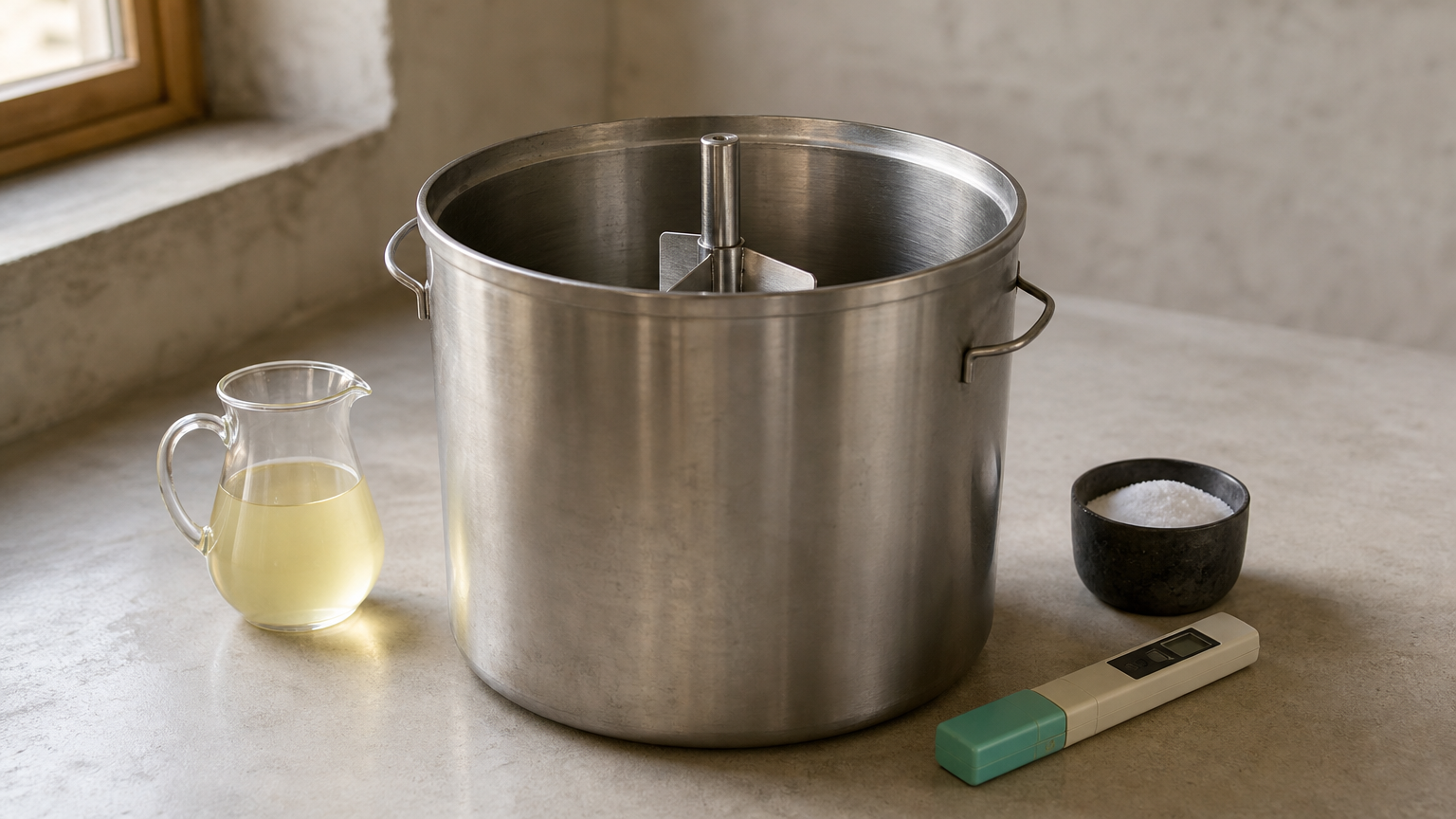
- Weigh the water into a clean vessel and warm it gently.
- Dilute the SLES in the water slowly, stirring gently. SLES 70% is a thick paste, so it dissolves better when added in small amounts.
- Add the CAPB and keep stirring at low speed.
- Add cocamide MEA, fragrance and preservative.
- Adjust the pH to about 5.5 to 6.2 with citric acid.
- Add salt last, as a dilute solution in small portions, and check the viscosity after each addition.
- Let the batch rest so the bubbles settle before you bottle it.
Stirring too fast traps air, and adding salt too early hides the true pH. Store CAPB itself in sealed containers to prevent contamination and evaporation.
Add salt last and slowly, because viscosity rises to a peak and then falls.
Adjusting a recipe for a face cleanser
For a face cleanser, cut the total surfactant, favor CAPB over SLES, and keep the pH near 5.5. Run a small trial batch, check how the foam rinses, and test the finished product on a few volunteers before you scale up. Do not skip the patch test on a product meant for the face. The safety section below explains why.
Formula, structure and grades of cocamidopropyl betaine
The chemical formula of cocamidopropyl betaine is C19H38N2O3, with a molecular weight of 342.5 g/mol and CAS number 61789-40-0. That formula describes the lauric (C12) member of the family. The commercial product is a blend of coconut fatty-acid chain lengths, so the formula is a representative one.
Identity and physical properties
| Property | Value |
|---|---|
| INCI name | Cocamidopropyl betaine |
| IUPAC name | 2-[3-(dodecanoylamino)propyl-dimethylazaniumyl]acetate |
| CAS number | 61789-40-0 |
| Molecular formula | C19H38N2O3 |
| Molecular weight | 342.5 g/mol |
| Appearance | Clear, pale yellow liquid |
| Density | 1.053 g/cm³ at 20 °C |
| Solubility | Readily soluble in water |
| Charge | Amphoteric (zwitterionic) |
The word amphoteric means the molecule carries both a positive and a negative charge. Which one dominates depends on the pH. Some textbooks argue that betaines are better described as cationic, but suppliers and formulators still call them amphoteric, and you will see that term on spec sheets.
How it is made, and why that affects quality
Manufacturers react coconut fatty acids with dimethylaminopropylamine (DMAPA) to form an amidoamine, then react that with sodium monochloroacetate to form the betaine. The reaction is never perfectly complete. Leftover amidoamine and DMAPA are the impurities linked to skin allergy, so a supplier’s spec sheet matters as much as the active percentage. Sodium chloride is a by-product of the reaction, which is why the liquid carries salt.
Strengths: 30%, 45 and other numbers
The standard commercial strength is about 30% active, and the product we list in that strength is described as a pale yellow liquid. Other suppliers sell grades at 35% or 38% active, so always compare on an active basis. If you see a number such as 45 in a product name, check whether it means percent active, percent total solids or simply a product code. A 45 that refers to something other than active content will throw your dosing off.
Compare grades by percent active and impurity limits, not by the number in the product name.
Betaine vs cocamidopropyl betaine
Plain betaine and cocamidopropyl betaine are two unrelated ingredients that share a word in their INCI names. Plain betaine (trimethylglycine) is a humectant that holds moisture in skin and hair. Cocamidopropyl betaine is a surfactant that cleanses and foams. You would never swap one for the other.
Two ingredients, one word
Plain betaine is a small amino acid derivative, often extracted from sugar beet. It is a water-loving, crystalline material that conditions and hydrates. The "betaine" in CAPB is a chemical family name. Around 15 to 20 surfactants carry it, including coco betaine and lauryl betaine, and they all work as cleansers and foam builders.
| Betaine (trimethylglycine) | Cocamidopropyl betaine | |
|---|---|---|
| Role | Humectant, hydrates and supports the skin barrier | Surfactant, foams, thickens and softens harsh detergents |
| Origin | Commonly sugar beet | Coconut fatty acids plus DMAPA |
| Typical form | White crystalline solid | Aqueous liquid, about 30% active |
| Used in | Moisturisers, conditioners, scalp products | Shampoos, body washes, face cleansers, hand soaps |
| Leave-on use | Common | Not typical |
Reading a label correctly
If a product says "betaine" on its own, it is a moisturising ingredient. If it says "cocamidopropyl betaine," it is a cleanser. The two can sit in the same formula without conflict. Plain betaine added to a mild body wash can improve hydration and foam feel, while CAPB handles the cleansing. When you shop, check the full INCI name, and do not buy plain betaine for a foaming job.
If you need foam and cleansing, you want cocamidopropyl betaine, not plain betaine.
Is cocamidopropyl betaine safe, and is it good for the face?
Cocamidopropyl betaine is generally considered safe in rinse-off products at normal use levels. It is a mild skin and eye irritant at higher concentrations and a rare cause of allergic contact dermatitis. The face is fine for it, provided the product is rinse-off, well made and patch-tested.
What the safety data shows
A 2024 safety assessment reviewed the toxicology of CAPB. A 92-day oral study in rats gave a no-observed-adverse-effect level of 250 mg/kg/day. The assessment calculated a margin of safety above 100 at a maximum of 6% in leave-on products and 30% in rinse-off products. It noted CAPB is used at up to 30% in cosmetics. Skin irritation in rabbits was mild at full strength.
The concentrate is another matter. In rabbit tests, 30% CAPB was corrosive to unrinsed eyes, while rinsed eyes showed minimal irritation. In your workshop, that means gloves, goggles and an eyewash within reach when you handle the raw liquid.
Allergy and impurities
Cocamidopropyl betaine was first suspected as an allergen, but later work points to residual amidoamine and DMAPA. People who test positive to those two should avoid products containing CAPB. In a patch-test series of 10,798 patients, only 29 (0.27%) reacted. A smaller occupational group that included hairdressers showed a rate of 7.2%, which shows that frequent, repeated exposure raises the risk.
For you as a formulator, the practical response is simple. Ask your supplier for the amidoamine and DMAPA limits, buy a higher-purity grade, and avoid leave-on use at high levels. Higher-purity material has been associated with fewer sensitisation cases.
Using it in face products
For a face cleanser, keep CAPB in a rinse-off format, stay near skin-friendly pH, and patch-test the finished product on volunteers before you launch. Avoid claims such as "hypoallergenic" unless you can back them. Cosmetics in South Africa fall under the Foodstuffs, Cosmetics and Disinfectants Act, so confirm labelling and claim requirements for your product with a compliance professional. This article is general information, not medical advice.
Treat CAPB as safe in rinse-off use, but demand low impurity limits and patch-test every finished product.
Cocamidopropyl betaine alternatives and when to switch
The best cocamidopropyl betaine alternative depends on the job you need done. Cocamide MEA stabilises foam, coco betaine and lauryl betaine replace the amphoteric role, and alkyl glucosides and isethionates replace a primary surfactant when you want a gentler or sulfate-free system.
Alternatives compared
| Alternative | Role | Trade-off |
|---|---|---|
| Coco betaine, lauryl betaine | Amphoteric co-surfactants | Different thickening and foam behavior, so retest the recipe |
| Cocamidopropyl hydroxysultaine | Amphoteric co-surfactant used in baby shampoos | Check cost and availability |
| Cocamide MEA | Nonionic foam stabiliser and thickener | Does not replace the amphoteric mildness effect |
| Alkyl glucosides | Mild nonionic primary surfactants | Lighter foam |
| Sodium cocoyl isethionate | Mild anionic primary surfactant | Handles and dissolves differently |
When switching makes sense
Switch for one of three reasons. The first is an allergy concern from a customer group or a test result. Alkyl betaines such as coco betaine have no amide group, so they do not carry amidoamine, although they still need testing. The second is a label claim such as sulfate-free, which means replacing SLES, not CAPB. The third is a performance gap, such as foam that collapses in your base.
Do not swap one-for-one by weight. Different surfactants thicken, foam and rinse differently, so run a small trial for each change. The anionic partners we stock, such as SLES 70% and ammonium lauryl sulphate, are surfactants that pair with CAPB. They are not alternatives to it.
Change one ingredient at a time, because every swap shifts viscosity, foam and pH.
Cocamidopropyl betaine price and where to buy it in South Africa
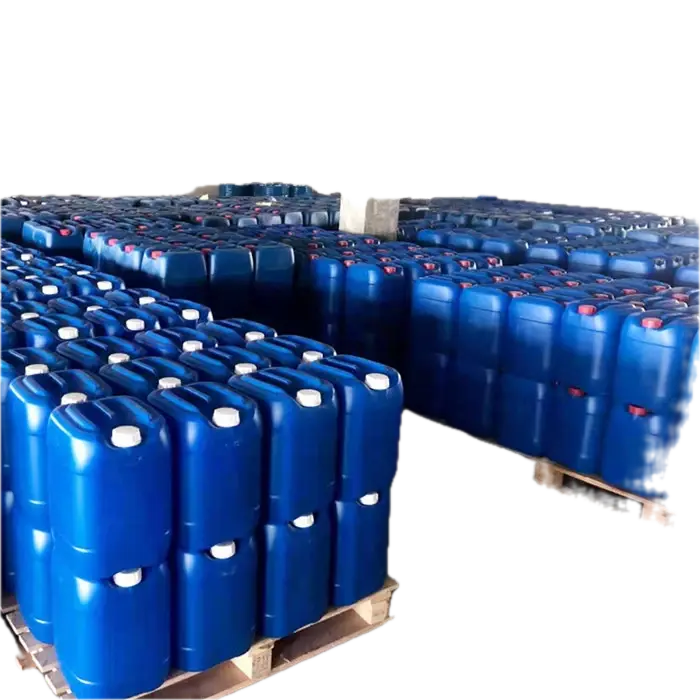
You can buy cocamidopropyl betaine 30% online from Masiye Labs, with prices listed from R1,383 up to R10,904 depending on pack size. All prices include VAT, and the product sits in the Raw Detergent-Cosmetic Grade Chemicals category.
What it costs
| Product | Sizes | Price (incl. VAT) |
|---|---|---|
| Cocoamido Propyl Betaine (CAPB) 30% | 25 kg, 200 kg | R1,383 to R10,904 |
| CAPB-Cocomidopropyl Betaine 200 kg | 200 kg | R8,955 |
| Sodium Laureth Sulfate 70% | 5 kg, 25 kg | R388 to R1,350 |
| Ammonium Lauryl Sulphate 25 kg | 25 kg | R1,676 |
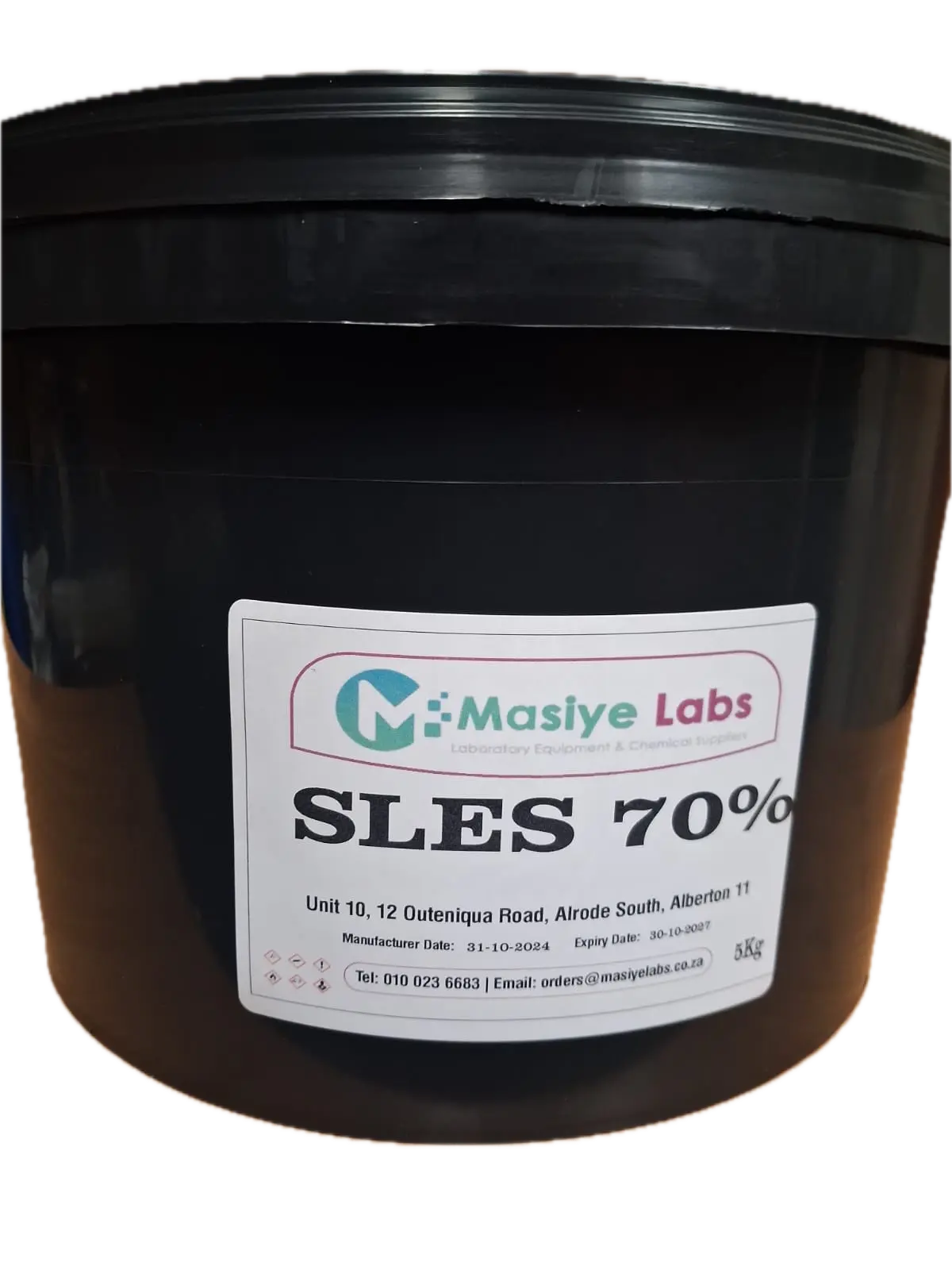
Here is a worked example. The 200 kg listing at R8,955 works out to about R44.78 per kg. The body wash in the starter table uses 10 kg of CAPB per 100 kg batch, so the CAPB in that batch costs about R447.75. Smaller packs cost more per kg, so a first trial run will cost more per kilogram than that. Prices change, so check the live listing before you plan a budget.
What to check before you order
- Percent active. Confirm 30% active and compare other suppliers on that basis.
- Form. The standard form is an aqueous liquid. Searches for a powder often come from plain betaine, which is a crystalline solid. A powdered CAPB is a different, less common product, so ask for a quote if you need one.
- Spec sheet. Ask for impurity limits (amidoamine, DMAPA) and salt content.
- Pack size. Pick the smallest size that fits your trial plan.
Check the grade before you pay, because we accept no returns on opened reagents or wrongly ordered chemicals, and we charge a 20% handling fee on items ordered incorrectly. If you need budget approval first, use the Add to Quote tool, download the quotation and buy when it is signed off.
Buying near you, and delivery
Masiye Labs is based in Alrode South, Johannesburg, and ships by courier across South Africa and beyond, so you do not need to live nearby. Orders usually dispatch within 2 business days of payment, and domestic shipments are generally in transit for 2 to 7 days. You receive a tracking link when the order leaves. Shipping is calculated at checkout from the weight, dimensions and destination of your order, which matters for 25 kg and 200 kg packs. For questions on grades or quantities, message the team on WhatsApp at +2765 898 6271.
Buy by percent active and impurity limits, and let the spec sheet settle the final choice.
Putting cocamidopropyl betaine to work
Cocamidopropyl betaine is a mild, coconut-derived co-surfactant with the formula C19H38N2O3. It lifts foam, builds viscosity and calms harsher detergents in shampoos, body washes and face cleansers. It is not plain betaine, which is a moisturiser. At normal rinse-off levels the safety data is reassuring, as long as you buy a low-impurity grade, handle the concentrate with care and patch-test your finished product.
Start with a small bench batch from the starter table, add salt last and trial every change on its own. When you are ready to source the ingredients, you can order CAPB 30% and the partner surfactants from the Masiye Labs online store or build a quotation for approval first.