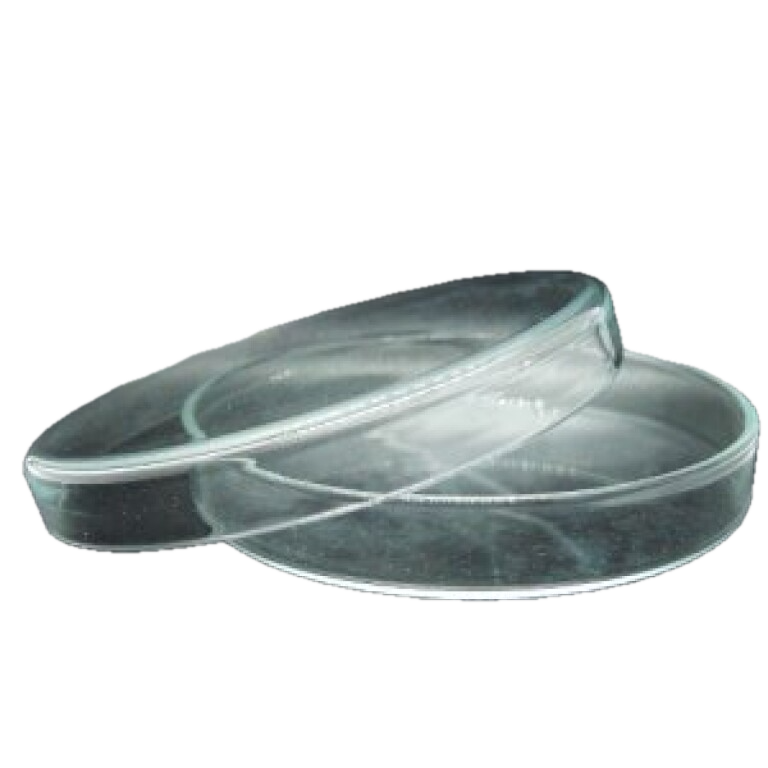
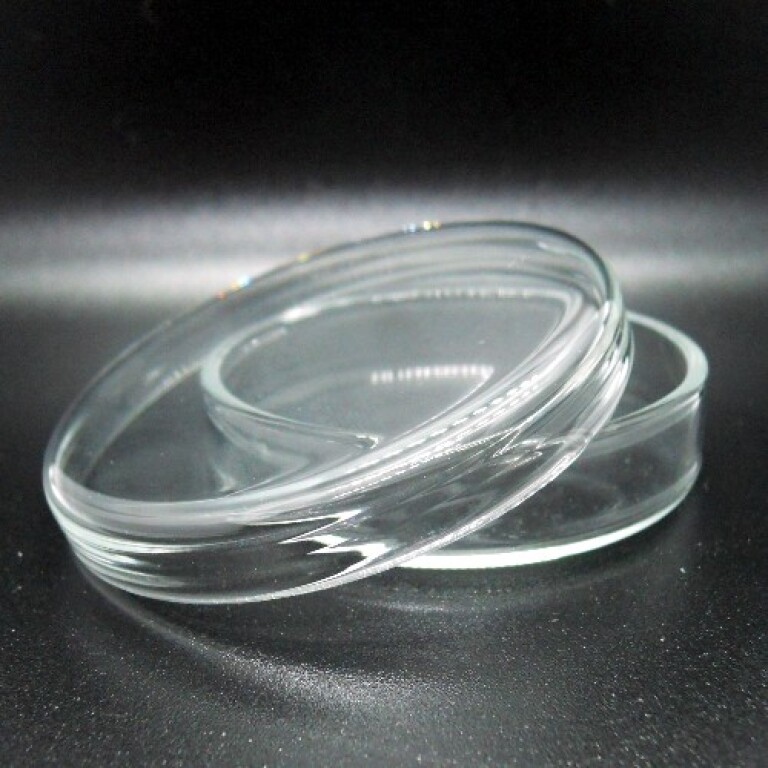
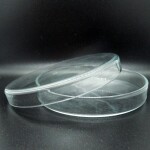
Petri Dish-Glass 60mm
R65.00

Petri Dish Glass 60mm
| Weight | 0.100 kg |
|---|---|
| Dimensions | 10 × 10 × 5 cm |
Petri Dish-Glass 60mm
60mm glass Petri dishes are reusable, autoclavable containers used primarily for cultivating microorganisms (bacteria, fungi), cell cultures, and small tissue samples in laboratories.
Their clear, durable, and chemical-resistant glass construction makes them ideal for microscopic observation, streaking, and testing, such as antimicrobial susceptibility, in both research and education settings.
Petri Dish-Glass 60mm
Key Uses and Applications
Microbial Cultivation: Growing bacteria, yeast, or fungi on solid media like agar.
Cell Culture: Maintaining and observing plant or animal cells.
Microscopy: Allowing clear visualization of colonies or samples, thanks to the flat, transparent base.
Laboratory Procedures: Used for drying, storing, or staining samples.
Environmental Monitoring: Collecting air or surface samples for hygiene testing.
Petri Dish-Glass 60mm
Key Features
Material: High-quality soda-lime or borosilicate glass.
Reusable & Sterilizable: Can be sterilized via autoclaving or dry heat, making them more environmentally sustainable than plastic.
Design: Typically consists of a 60mm diameter base with a slightly larger, non-airtight, loose-fitting lid to allow gas exchange.
Heat Resistance: Suitable for high-temperature sterilization.
Common Uses
Microbial Culture: The main application is to grow and isolate microorganisms such as bacteria, fungi, and yeast on a solid nutrient medium like agar.
Cell Culture: It is used in cell biology to culture and maintain various cell lines (e.g., mammalian or plant cells), providing a stable environment for their growth and proliferation.
Antibiotic Susceptibility Testing: The dishes are used to test the effectiveness of different antimicrobial agents against specific bacteria (e.g., using the disc diffusion method).
Observation and Research: The transparent material and flat base allow for clear observation of growth patterns and characteristics, often under a microscope, without disturbing the culture.
Environmental Monitoring: Researchers use them in environmental studies and food safety testing to collect and culture samples from air, water, or surfaces to detect contaminants or pathogens like Salmonella or E. coli.
General Lab Work: They can also serve as shallow containers for general lab purposes, such as observing seed germination in educational settings, holding small samples (liquids, powders, insects), or evaporating solvents to get a residue. Petri Dish-Glass 60mm
The 60mm size is particularly useful for small-scale and preliminary experiments where a large surface area is not required, as it conserves media and incubator space. As a glass item (often made of durable borosilicate glass), it is designed to be repeatedly sterilized using an autoclave, making it a cost-effective and sustainable option for ongoing laboratory use.
Petri Dish Glass 60mm
Petri Dish-Glass 60mmm
You may also like…

Related products