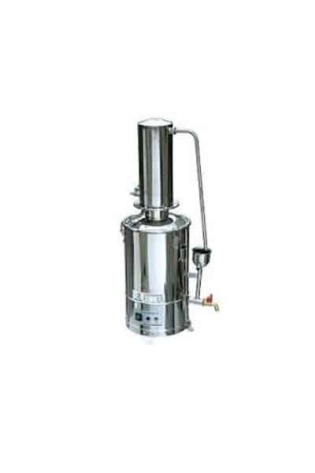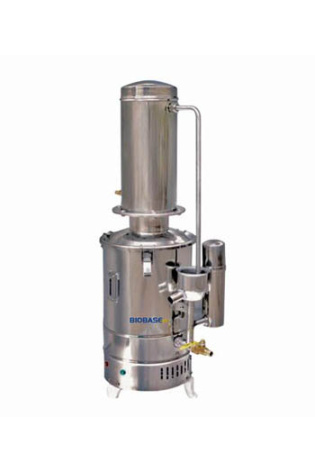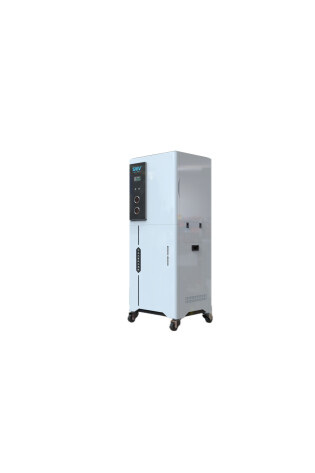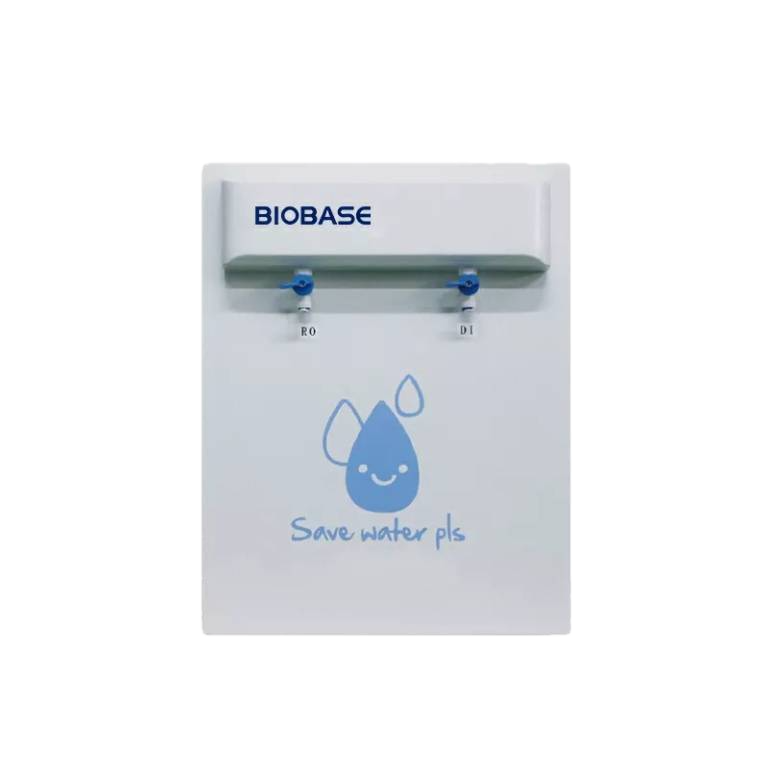
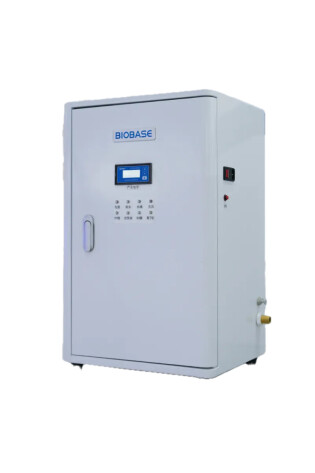
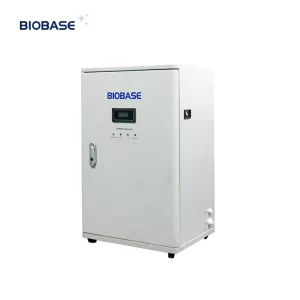
Laboratory Water Deioniser 10L
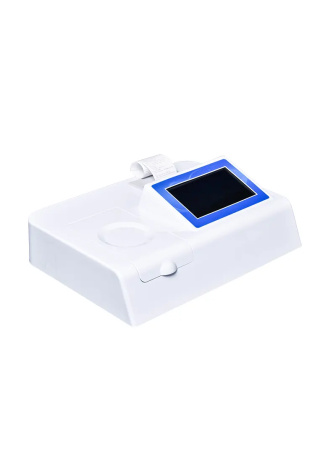
A 10L laboratory water deioniser is used to produce high-purity, Type II/III water by removing dissolved mineral ions, organic matter, and contaminants through techniques like reverse osmosis (RO) and ion exchange (DI). It is essential for preparing buffers, cleaning glassware, feeding autoclaves, and supporting chemical analysis.
Laboratory Water Deioniser 10L
Common Applications for 10L Lab Deionisers:
Analytical Chemistry: Preparing reagents, buffers, and mobile phases for HPLC, spectrophotometry, and chromatography to ensure accurate, low-background results.
Glassware & Instrument Cleaning: Providing a final rinse for laboratory glassware, cuvettes, and sensitive equipment to prevent residue, scaling, and cross-contamination.
Laboratory Equipment Feed: Supplying, feeding, or topping up autoclaves, water baths, humidifiers, and hydrogen generators, preventing corrosion and mineral buildup.
Biological & Chemical Research: Producing purified water for cell culture media, molecular biology (e.g., DNA/RNA work), and as a solvent in synthesis.
Small-Scale Production: Used in pharmaceutical formulation, cosmetic, and electronics labs for washing electronic components or producing sterile solutions.
Masiye Labs | Laboratory Water Deioniser 10L
Why 10L Capacity?
These units are designed for small-to-medium-sized laboratories, research, and development units, providing a continuous supply of high-purity water (sometimes up to
) directly from tap water.
Biobase
Biobase
+3
Key Features and Benefits:
Improved Accuracy: Ensures consistent and reproducible, interference-free experimental results.
Low Maintenance: Many units feature easy-to-replace cartridges (mixed-bed resin) and automatic controls.
Efficiency: Consumes less energy and, in many cases, is more cost-effective than traditional distillation.
Water Quality Monitoring: Many systems include, or allow for, online detection of water resistivity, ensuring quality (e.g., up to
18.2
- General Laboratory Use: Produces pure water that meets the requirements for most laboratory tasks.
- High-Precision Labs: Specifically designed to produce water with low levels of ions, organic matter, and other potential heat sources.
- Analytical Applications: Suitable for analytical techniques that require ultrapure water.
-
- Pre-treatment: Initial filtration to remove larger particles.
- Reverse Osmosis (RO): Removes a significant portion of dissolved salts and other contaminants from the water.
- Deionization (DI): Uses ion exchange to remove remaining ions, resulting in deionized water.
- Other processes: May also include ultrafiltration and UV sterilization to further purify the water and kill microorganisms.
|
Model
|
SCSJ-I-10L
|
SCSJ-II-30L
|
|
Water Output Type
|
RO &DI water
|
|
|
Water Output Speed
|
10L/H
|
30L/H
|
|
Purifying Procedure
|
PF+AC+RO+DI
|
|
|
Water Supply Requirement
|
Tap water: TDS<200ppm, 5~45℃, 1.0~3.5Kgf/cm2
|
|
|
Pre-treatment
|
10’’PP filter*1+10’’Activated carbon *2
|
|
|
RO unit
|
100GPD RO membrane*1
|
|
|
Subsequent unit
|
Deion purification column*1
|
|
|
Pure Water Quality
|
●Soluble organic matter: Rejection rate>99% (molecular weight>100)
●Particle: Rejection rate>99%; ●Microbe: Rejection rate>99% ●Salt rejection rate:>99%; ●TDS (total solids solubility): RO water:5~10 ppm; ●Resistivity: 7.0~10.0 MΩ·cm; ●PM (particulate matter) (>0.22μm): <1/ml; ●Conductivity: 0.143~0.100 μs/cm; ●Microbe/Germ: <1 CFU/ml |
|
|
Water Quality Monitor
|
TDS (Total Dissolved Solids) meter
|
|
|
Consumption
|
48W
|
200W
|
|
Power Supply
|
AC220±10%, 50/60Hz; 110±10%,60Hz
|
|
|
Standard Configuration
|
Main body (Include 1 set of cartridges)+TDS meter
|
|
|
External Size (W*D*H)
|
394*390*502mm
|
325*403*650mm
|
|
Package Size (W*D*H)
|
531*551*621mm
|
391*471*1176mm & 700*300*250mm
|
|
Gross Weight
|
37.6kg
|
41kg
|
- Laboratory Water Deioniser 10L
Laboratory Water Deioniser 10L