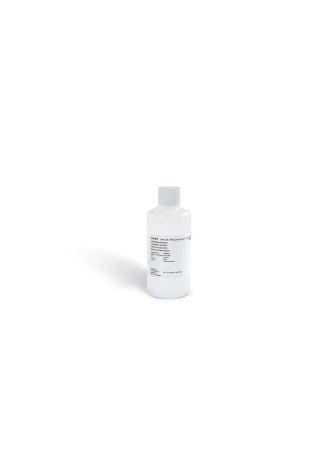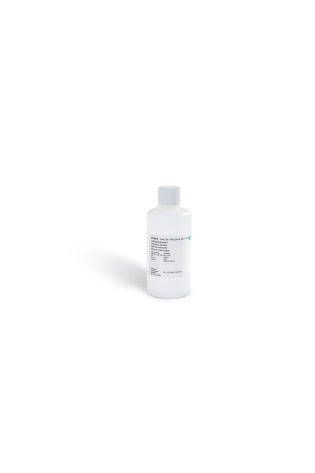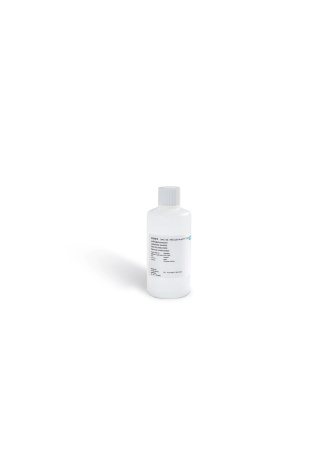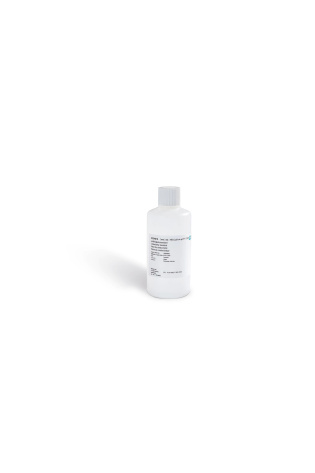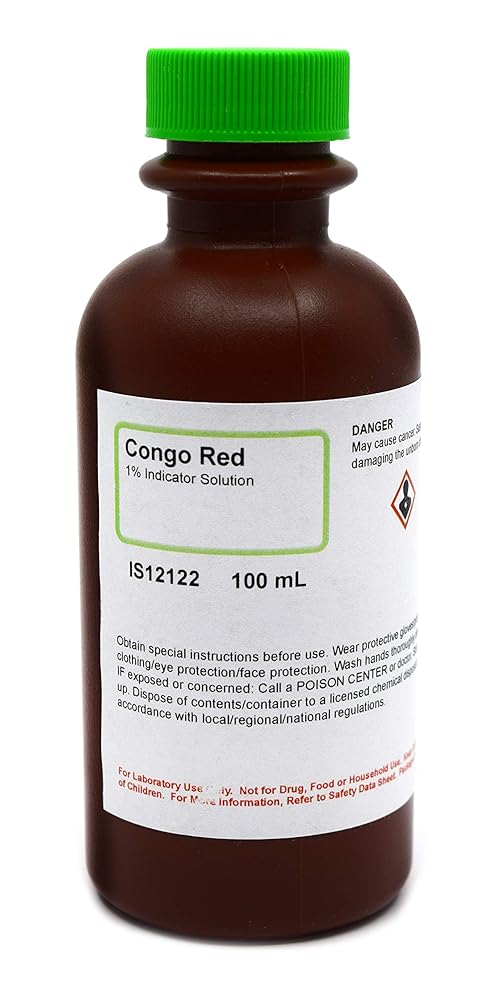

Congo Red Indicator
Congo Red is a versatile, anionic diazo dye used primarily as a histological stain to detect amyloid deposits (showing apple-green birefringence under polarized light) and as a pH indicator (blue at pH 3.0, red at pH 5.2). It is also applied in microbiology for cell wall staining, in industrial dyeing (cotton/cellulose), and in research for studying protein aggregation.
Congo Red Indicator
Key Uses and Applications
Medical & Histological Diagnosis: The “gold standard” for detecting amyloidosis, where it stains amyloid proteins in tissues (liver, kidney, heart) to produce a characteristic apple-green birefringence under polarized light.
pH Indicator: Used in laboratories to detect acidic changes, with a color transition from blue (pH 3.0) to red (pH 5.2).
Microbiology & Cell Biology: Used to visualize cell walls in fungi and plants, and to identify Gram-negative bacteria.
Biofilm Detection: Utilized in Congo Red Agar media to identify the ability of microbes to form biofilms.
Research (Protein Aggregation): Applied in studies regarding Alzheimer’s, Creutzfeldt-Jakob disease, and other neurodegenerative diseases.
Industrial Dyeing: Historically used for dyeing cotton, paper, and leather, though its use has declined due to toxicity.
Medical Diagnostic Tests: Used in a urine test to detect preeclampsia in pregnant women.
Properties
Solubility: Soluble in water, better in ethanol.
Structure: Symmetrical diazo dye.
Hazard: Known to be toxic and carcinogenic, requiring careful handling.
Congo Red Indicator