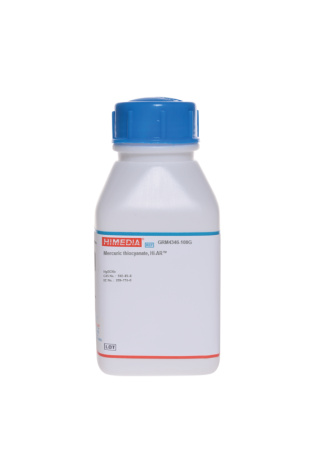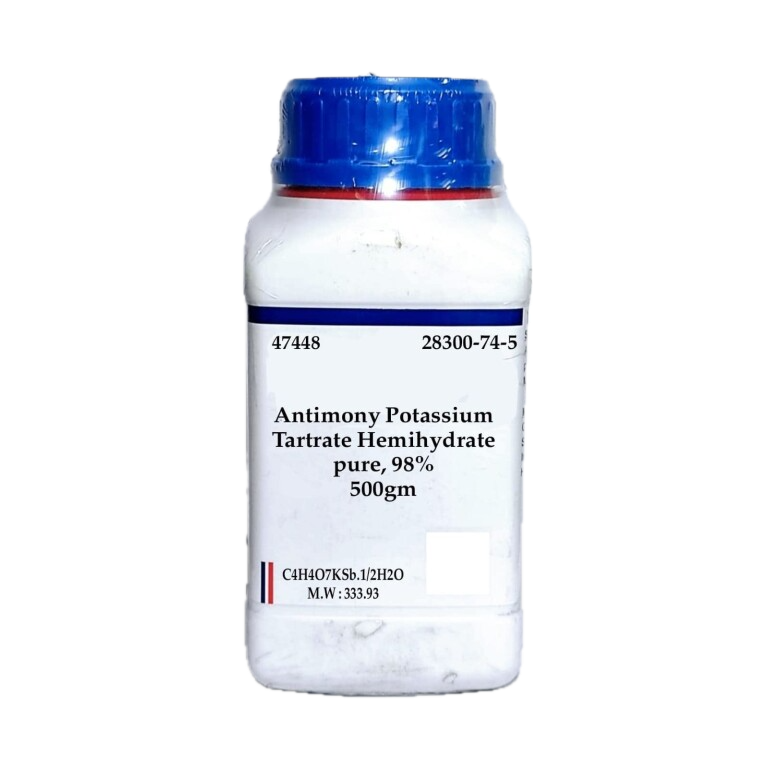
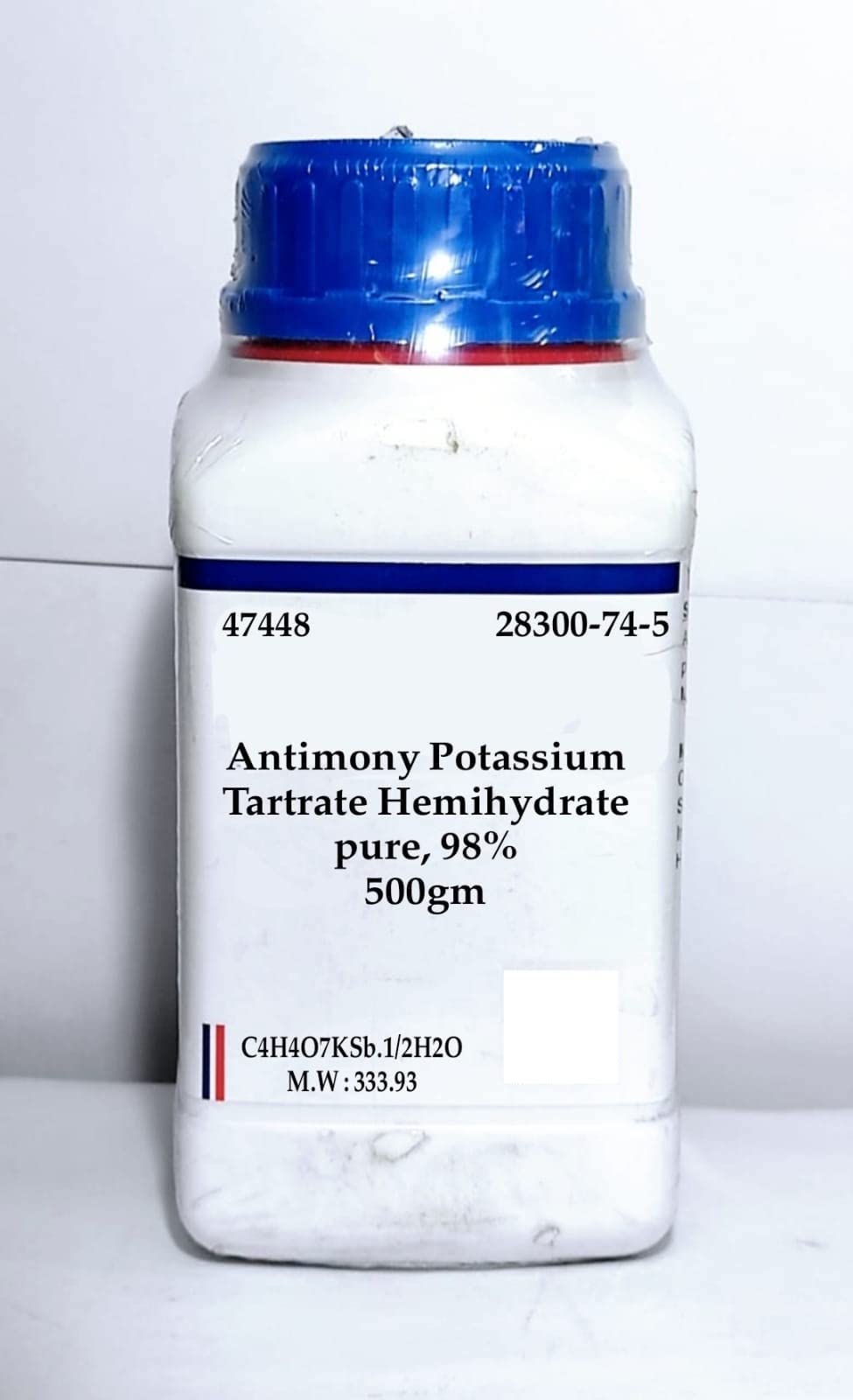
Antimony Potassium Tartrate AR 500g
R850.00
| Weight | 0.500 kg |
|---|---|
| Dimensions | 20 × 20 × 20 cm |
Antimony Potassium Tartrate AR 500g
Antimony potassium tartrate (also known as tartar emetic) is a toxic crystalline salt.
Its historical and niche uses span three primary fields:
1. Industrial & ManufacturingTextile & Leather Processing: Acts as a vital mordant (a binding agent) to help fix certain dyes to fabrics and leathers.
Insecticides: Historically utilized as an active ingredient in specific agricultural pesticides.
Chemical Synthesis: Employed as a reagent for creating specialty antimony-based pigments (e.g., antimony vermillion).
2. Human Medicine (Historical/Niche)Tropical Disease Treatment: Formerly used as the primary intravenous drug for treating parasitic tropical infections like schistosomiasis (specifically Schistosoma japonicum).
Expectorant: Used in microscopic doses in specific cough remedies to promote the secretion of sputum.
Emetic Agent: In the past, it was administered as an agent to induce vomiting in acute poisoning cases. It has largely been replaced by safer alternatives due to risks of lethal cardiac toxicity.
3. Veterinary MedicineRuminant Aid: Combined with other compounds (like ferrous sulphate), it is used as a ruminal tonic for dairy cows and buffaloes to treat ruminal stasis and stimulate stomach motility
Antimony Potassium Tartrate AR 500g
Laboratory reagent
Application
Potassium antimony(III) tartrate hydrate may be used as a standard during the quantification of Sb species present in the juices by HPLC.
It may also be used in the preparation of novel Sb(III)-containing polyanions by reacting with trilacunary Keggin-type polyanions
| assay | ≥99% |
| optical activity | [α]20/D +141°, c = 2 in H2O |
| density | 2.6 g/mL at 25 °C (lit.) |
| SMILES string | O.[K+].[K+].O=C1O[Sb-]23OC1C4O[Sb-]5(OC(C(O2)C(=O)O3)C(=O)O5)OC4=O |
- Antimony Potassium Tartrate AR 500g
Related products